You know, these aluminium windows profiles… they’re everywhere these days. Seems like every new project I go to, it’s aluminium this, aluminium that. To be honest, it’s a bit of a change. Used to be all about PVC, and before that, wood. But aluminium's taken off, and it's not hard to see why. Lightweight, strong, doesn't rust… all the good stuff. But it's not a magic bullet, not by a long shot. The whole industry is shifting towards larger glass panes, more complex designs. People want these huge, seamless windows, all glass, minimal frame. It looks good on paper, but getting it right on site? That's where things get tricky.
Have you noticed how everyone is obsessed with thermal breaks now? It’s not enough to just have aluminium; you need that break to prevent condensation, reduce energy loss. The thing is, there are so many different thermal break materials being thrown around. Polyurethane, polyamide, PVC… each has its pros and cons. I encountered this at a factory in Foshan last time; they were using a low-grade polyurethane, and it was crumbling within months. Total disaster. And don't even get me started on the finishing. Powder coating, anodizing, painting… getting a consistent, durable finish that can withstand the elements is a constant battle.
It’s funny, you spend all this time designing, specifying materials, running tests, but ultimately, it's the guys installing it who really determine whether it’s a success or not. They’re the ones dealing with misaligned frames, warped panels, and all sorts of other headaches. They need profiles that are easy to work with, easy to cut, easy to assemble. If it’s a pain to install, they'll find a way to make it work, even if it means compromising on quality. And that's what keeps me up at night.
The Global Rise of Aluminium Windows Profiles
The demand for aluminium windows profiles is skyrocketing worldwide. The UN projects continued urbanization, particularly in developing nations, which directly translates to increased construction activity and, consequently, demand for building materials like aluminium. It’s not just residential either; commercial projects, especially high-rise buildings, are heavily reliant on aluminium for its strength-to-weight ratio. Strangely, even with steel prices fluctuating, aluminium has maintained a pretty steady climb.
This growth isn't just about new construction, it's also a massive replacement market. People are ripping out old, inefficient windows and upgrading to aluminium for energy savings and improved aesthetics. There’s a real push for sustainable building practices globally, and aluminium, being readily recyclable, fits the bill. But that recyclability isn’t a given – it requires proper infrastructure and responsible sourcing, something we’ll get into later.
Defining Aluminium Windows Profiles: Beyond the Metal
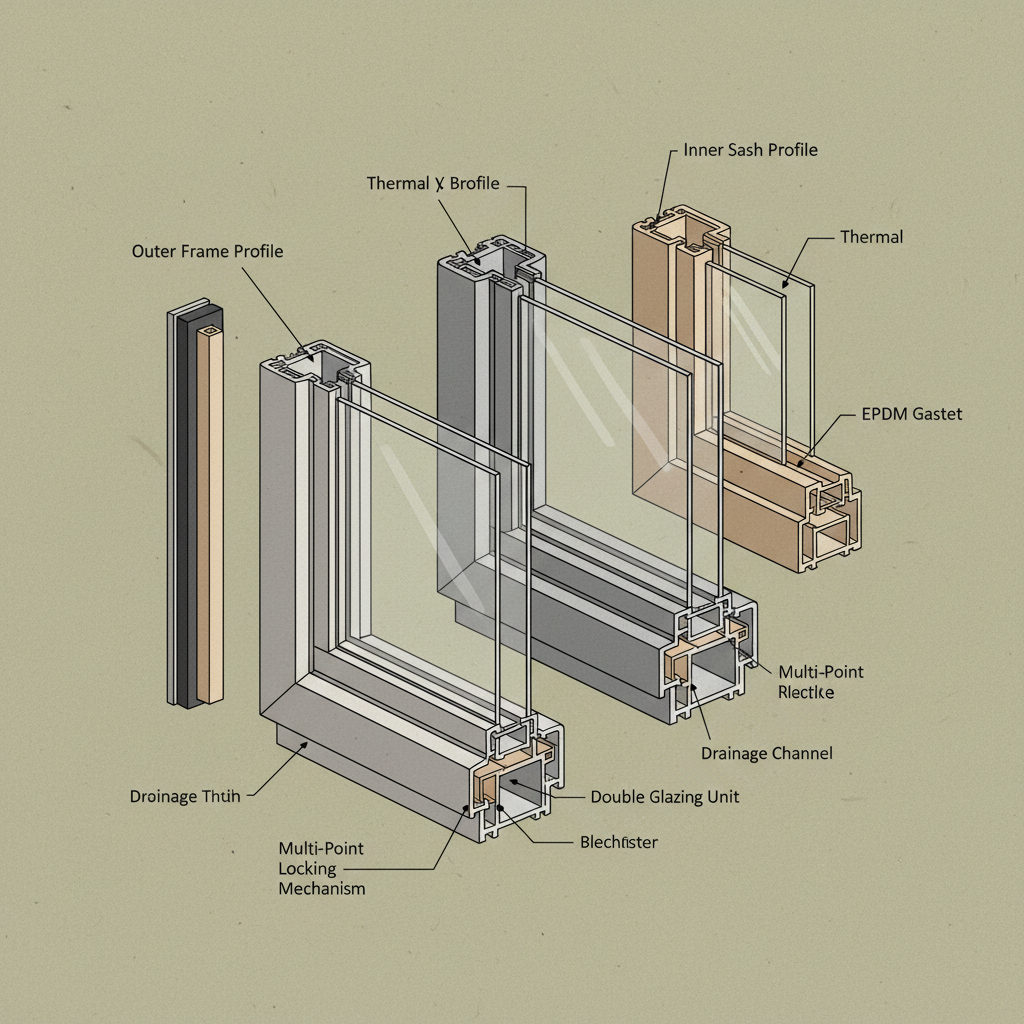
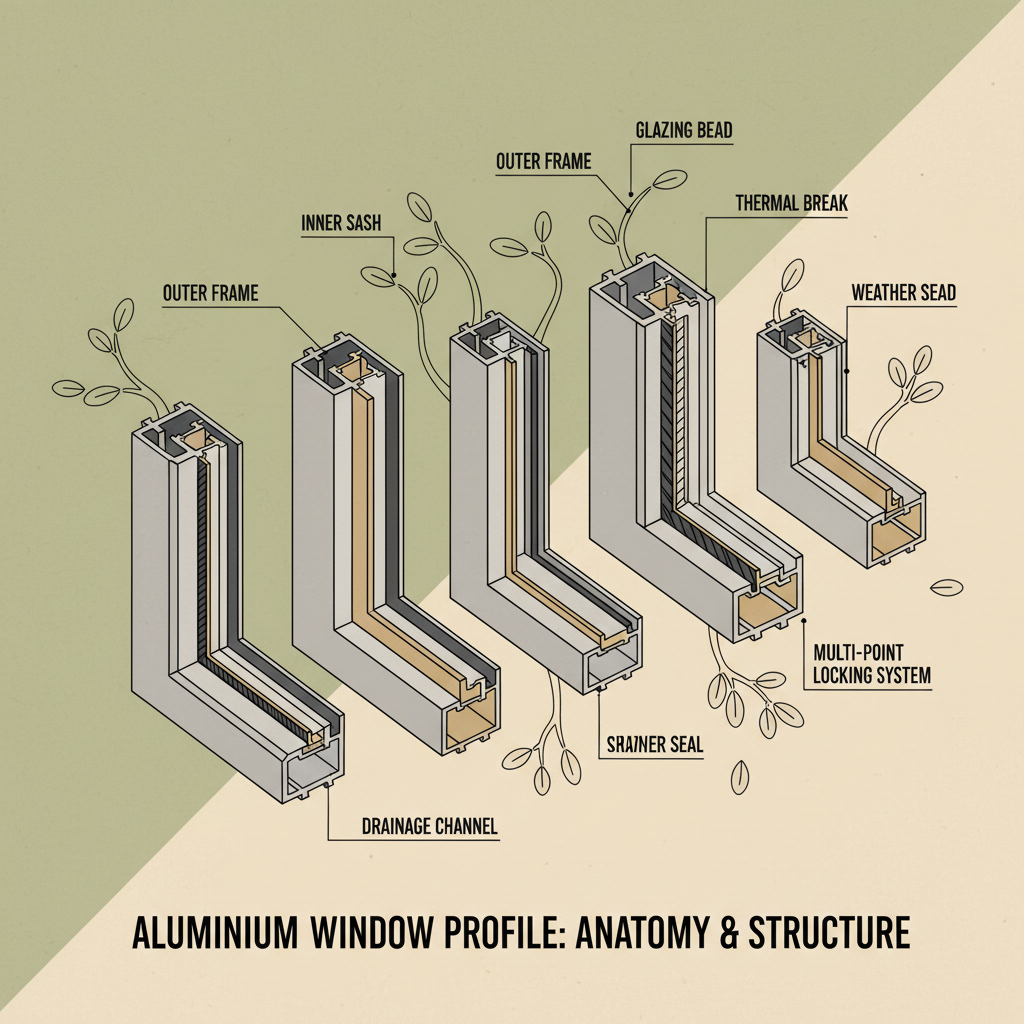
Alright, so what are aluminium windows profiles? It's not just a piece of metal bent into shape, you know? It’s the entire system: the aluminium extrusion itself, the thermal breaks (if any), any integrated seals, and even the coatings. It’s the backbone of the window or door. A good profile provides structural support, weatherproofing, and aesthetic appeal. It's the first line of defense against the elements.
They’re crucial for modern building designs. With architects pushing the boundaries of what's possible – huge glass walls, complex shapes – you need a material that can handle the stress and maintain its integrity. They connect directly to modern industry needs for energy efficiency and design flexibility. And honestly? They make my job easier when they're designed properly.
The connection to humanitarian needs is a little less direct, but it's there. Durable, lightweight structures are essential in disaster relief, and aluminium profiles can be used to create temporary shelters or reinforce existing buildings.
Key Properties of Superior Aluminium Windows Profiles
First off, durability is king. These profiles need to withstand years of exposure to sun, rain, wind, and everything else Mother Nature can throw at them. That means a high-quality alloy, a robust extrusion process, and a durable finish. Then there’s thermal performance. As I said, thermal breaks are essential to reduce heat transfer and prevent condensation. It's not enough to just have a thermal break, it needs to be properly integrated and made of a material that won’t degrade over time.
Scalability is huge, too. Can you easily manufacture these profiles in large quantities to meet demand? Can you customize them to fit specific project requirements? Cost-efficiency matters, of course. Aluminium isn’t cheap, but you need to balance cost with performance and durability. A cheap profile might save you money upfront, but it'll likely cost you more in the long run through repairs and replacements. And finally, there's corrosion resistance. Aluminium naturally forms a protective oxide layer, but that layer can be compromised by certain chemicals or environmental factors. That's where anodizing and protective coatings come in.
Global Applications and Diverse Use Cases
You see aluminium windows profiles in everything these days. Residential homes, office buildings, hospitals, schools… even airports. They're particularly popular in coastal regions, where corrosion resistance is a major concern. In Scandinavia, they’re used extensively in energy-efficient homes. In the Middle East, they're a staple in luxury villas and skyscrapers. Anyway, I think they’re becoming standard in sustainable building projects globally.
I was working on a project in Singapore last year, and they were using aluminium profiles for a massive curtain wall system. The sheer scale of it was incredible. In post-disaster relief operations in the Caribbean, we used them to quickly construct temporary shelters. And in remote industrial zones in Australia, they’re used in mining facilities due to their durability and low maintenance requirements.
They're even finding their way into niche applications, like solar panel frames and greenhouse structures.
Aluminium Windows Profiles Performance Metrics
Advantages and Long-Term Value Proposition
The biggest advantage? Durability. Properly maintained, these things will last for decades. Then you’ve got the strength-to-weight ratio, which allows for larger openings and more design freedom. And, of course, the recyclability. You're reducing your environmental footprint, which is a big selling point these days. But let’s be real, it's not perfect. The initial cost is higher than PVC, and if you don’t specify a good thermal break, you’re going to have condensation issues.
Long-term, the reduced maintenance costs and energy savings can offset the higher upfront investment. You're also getting a premium product that enhances the aesthetic appeal of the building and increases its value. It’s a matter of balancing short-term costs with long-term benefits. The psychological aspect is big too—people feel safer and more comfortable in buildings with quality windows.
Future Trends and Innovations in Aluminium Profile Technology
There's a lot happening in this space. We're seeing a move towards super-slim profiles, pushing the boundaries of glass size and maximizing natural light. There’s also a ton of research going into new alloys, aiming for even higher strength and better corrosion resistance. Smart profiles, with integrated sensors and actuators, are on the horizon. Imagine windows that automatically adjust to optimize energy efficiency.
Digital fabrication techniques, like 3D printing, could revolutionize the way we manufacture aluminium profiles, allowing for greater customization and design complexity. But I think the biggest impact will come from sustainable manufacturing processes. Reducing the carbon footprint of aluminium production is crucial.
Challenges and Mitigation Strategies
One of the biggest challenges is maintaining quality control throughout the supply chain. You've got the alloy producers, the extruders, the finishers, and the fabricators… each one can introduce defects. You need to rigorously inspect materials at every stage. Another issue is thermal expansion and contraction. Aluminium expands and contracts with temperature changes, which can lead to stress cracks and air leaks. Proper design and installation are critical to mitigate this.
The biggest headache? Customization. Last month, that small boss in Shenzhen who makes smart home devices insisted on changing the interface to . What? It completely threw off the entire assembly line and wasted a week. I swear, some customers just want to see the world burn. Anyway, I think better communication and collaboration between designers, manufacturers, and installers are key to overcoming these challenges.
And honestly, a little common sense goes a long way.
Summary of Common Challenges and Mitigation Strategies for Aluminium Windows Profiles
| Challenge |
Severity (1-5) |
Mitigation Strategy |
Cost of Implementation (1-5) |
| Poor Quality Control |
4 |
Rigorous inspection at all stages, supplier audits |
3 |
| Thermal Expansion/Contraction |
3 |
Proper design, flexible sealants, appropriate glazing |
2 |
| Corrosion |
2 |
Anodizing, powder coating, protective finishes |
3 |
| Customization Requests |
5 |
Clear communication, design for manufacturability, standardized components |
4 |
| Installation Errors |
4 |
Proper training, detailed installation instructions, on-site supervision |
2 |
| Supply Chain Disruptions |
3 |
Diversified sourcing, buffer stock, long-term contracts |
3 |
FAQS
Honestly? Not thinking about the long game. They focus on the initial cost and forget about maintenance, durability, and thermal performance. You need to look at the total cost of ownership, not just the sticker price. A cheap profile might look good now, but it'll cost you more in the long run with repairs and replacements. I’ve seen it time and time again. And don’t even get me started on people who skip the thermal breaks! It’s just asking for trouble.
Massively important. Different alloys have different properties – strength, corrosion resistance, weldability. 6063 is a common choice for architectural applications, but 5052 is better for marine environments. You need to choose the right alloy for the specific application. It’s not a one-size-fits-all situation. And make sure your supplier is providing a certified alloy, otherwise, you’re just guessing.
Powder coating is cheaper and offers a wider range of colors. However, it’s not as durable as anodizing. Anodizing creates a protective oxide layer that’s incredibly resistant to corrosion and wear. It's more expensive, but it'll last much longer. It really depends on the application and budget, but for exposed environments, anodizing is the way to go.
Yes, to a point. Extrusion dies are expensive to create, so large-scale customization can be costly. But you can often modify existing profiles or combine different profiles to achieve a desired aesthetic. We recently had a client who wanted a curved window frame, and we were able to achieve it by using a combination of standard profiles and some custom bending. It’s all about being creative and working with a good extruder.
Recycling is key. Aluminium is infinitely recyclable, but it takes a lot of energy to reprocess it. There’s a growing focus on using more renewable energy in the aluminium production process. Inert anode technology is also a promising development. It eliminates greenhouse gas emissions during electrolysis. It's still early days, but it could be a game-changer.
First, you need a good supplier with a solid reputation. Second, you need to conduct thorough inspections upon arrival. Check for surface defects, dimensional accuracy, and alloy composition. I always carry a small testing kit with me on site – it’s saved my bacon more than once. And don’t be afraid to send samples back to the lab for more detailed analysis.
Conclusion
So, aluminium windows profiles. They’re not a perfect solution, but they’re incredibly versatile, durable, and energy-efficient. They’ve become a mainstay in modern construction, and that’s not going to change anytime soon. Choosing the right profile, alloy, and finish is critical, and you need to consider the long-term costs and benefits. It’s a complex topic, but getting it right can make all the difference.
Ultimately, whether this thing works or not, the worker will know the moment he tightens the screw. You can have the most sophisticated designs and the highest-quality materials, but if the installation is poor, it’s all for naught. That’s why I spend so much time on site, talking to the guys who are actually putting these things together. They’re the ones who tell me what works and what doesn’t. And that’s the most valuable feedback you can get.