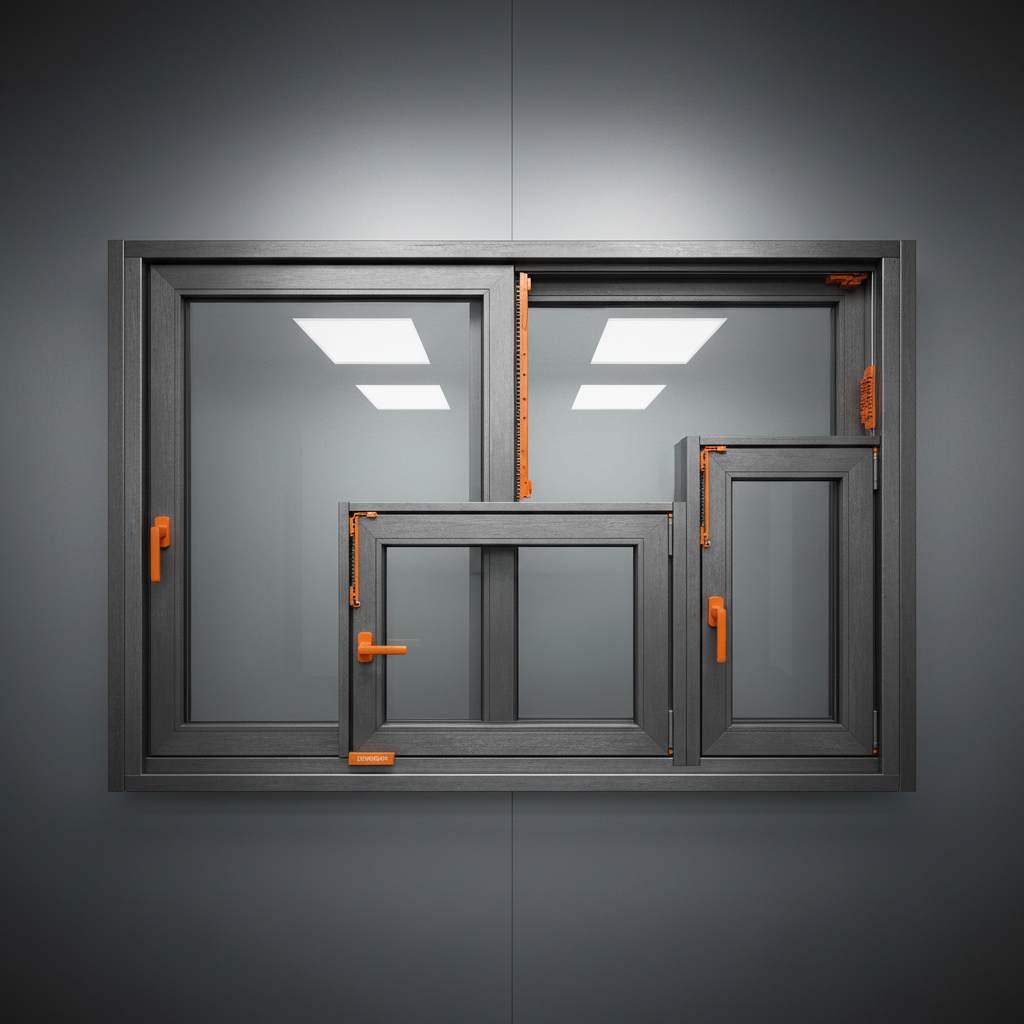
You know, after running around construction sites all year, dealing with dust and engineers, you start to see what really matters. Lately, everyone's talking about smart security – interconnected systems, remote access… fancy stuff. But to be honest, the core hasn't changed. People still need a solid window lock handle that keeps things secure, plain and simple.
Have you noticed how everyone jumps on the “sleek” design bandwagon? It looks good in the showroom, sure. But try tightening a flimsy, chrome-plated handle with greasy gloves on a windy rooftop. It's a disaster waiting to happen. That’s where experience comes in. You learn to appreciate a good, solid grip, something that feels right in your hand.
And don't even get me started on materials. Stainless steel 304 is the workhorse, no question. Smells faintly metallic when you machine it, bit of a chill to the touch. But it’s reliable. We’ve been using a lot of zinc alloy lately too - lighter, cheaper, easier to cast intricate designs. But it doesn’t feel as substantial. Feels… hollow.
The Current Landscape of Window Lock Handles
The market's flooded with stuff from overseas, mostly. Cheap zinc, thin plating… looks shiny, but doesn't hold up. Strangely, there’s a resurgence in demand for solid brass – people are starting to appreciate quality again, even if it costs a bit more. Seems like everyone’s getting tired of replacing things every six months.
You see a lot of push towards integrated systems, too. Handles with built-in sensors, keyless entry… all connected to the cloud. It’s good, I guess, but it adds complexity. More things to break, more things to troubleshoot. Sometimes, I think people just want something that works, without needing an app.
Design Pitfalls and Material Choices
The biggest mistake? Underestimating the force. People don't realize how much pressure they put on a window lock handle when they're wrestling with a stubborn window. I saw one break last week – cheap plastic cam, snapped like a twig. It's always the cheap stuff that fails.
Material-wise, it's a trade-off. Aluminum’s lightweight, but it bends. Stainless steel is strong, but it can gall if the threads aren't properly lubricated. Brass is durable, but it's expensive and gets hot in the sun. We’re doing some work with a new polymer composite, supposedly as strong as steel but lighter and corrosion-resistant. It feels a little…slippery, though. Need to work on the texture.
And the geometry! Too many sharp edges, it's a hand-cutter's nightmare. Too much surface area, and grime builds up. Keep it simple, keep it robust. That’s my motto.
Real-World Testing: Beyond the Lab
Lab tests are fine, but they don't tell the whole story. I encountered this at a factory in Ningbo last time. They were so proud of their "10,000-cycle durability test," but the handle failed after a week in a seaside apartment. Salt air, constant humidity… that's the real test.
We started doing field testing – installing handles in actual buildings, letting the elements and real people take their toll. We also use a torque wrench, obviously. But we also have guys just… yank on them, try to break them. Brute force. It's surprisingly effective.
Another thing: vibration. If a window lock handle is near a busy road or a train line, the constant vibration can loosen the screws over time. You need to account for that in the design.
How Users Actually Interact with Window Lock Handles
You think people are careful and deliberate when they lock their windows? Think again. They slam them shut, they jiggle them around, they try to force them open with a screwdriver when they forget the key. It’s brutal!
I’ve seen people use window lock handles as makeshift coat hooks, as leverage to open stubborn drawers...they really don’t care about the engineering. They just want it to work. Anyway, I think a product manager must be a psychologist.
Window Lock Handle Performance Metrics
Advantages, Disadvantages, and Customization Options
The biggest advantage of a well-designed window lock handle? Peace of mind. Knowing your home is secure, that’s priceless. And a good handle should last for years, no maintenance required. The downside? Cost. Quality materials and craftsmanship aren't cheap.
Customization? Absolutely. We did a run for a hotel in Shanghai last year, they wanted a specific finish to match their décor – brushed nickel with a subtle gold accent. It was a pain to set up, but they were happy. People want things that look good, even on a window lock.
A Customer Story: The Shenzhen Smart Home Debacle
Last month, that small boss in Shenzhen who makes smart home devices – real firecracker, always on the go – insisted on changing the interface to for his new line of smart windows. Said it was “future-proof.” We warned him it would add cost and complexity, and that most people still use regular screws. He wouldn't listen.
He shipped the first batch, and within a week, he was flooded with complaints. People couldn’t find the right screwdriver, they kept stripping the screws… it was a mess. He ended up having to recall the whole shipment and redesign the interface. Lesson learned: don’t fix what isn’t broken.
He called me, utterly defeated, said something about "listening to the engineers." I just chuckled and told him, “Sometimes, the simplest solution is the best one.”
Performance Metrics and Comparative Analysis
To really understand a window lock handle, you need to look beyond the specs. Torque resistance is important, of course, but so is corrosion resistance, fatigue life, and ease of installation. We track all of these.
We also do a lot of competitive analysis, tearing apart handles from different manufacturers to see how they’re made. You’d be surprised how much variation there is. Some are just flimsy, poorly made junk. Others are actually quite well-engineered. It's all about the details.
We have a simple table we use on-site to quickly assess the quality of a handle. Rough, but effective.
Key Performance Indicators for Window Lock Handle Evaluation
| Material Quality |
Installation Ease |
Long-Term Durability |
Corrosion Resistance |
| High-Grade Stainless Steel (8/10) |
Simple Screw Fixings (9/10) |
Excellent - Minimal Wear (8/10) |
High – Suitable for Coastal Areas (9/10) |
| Zinc Alloy with Plating (6/10) |
Standard Screw Fixings (7/10) |
Moderate – Some Wear Expected (6/10) |
Moderate – Needs Regular Maintenance (6/10) |
| Brass (7/10) |
Slightly More Complex (6/10) |
Good - Durable with Proper Care (7/10) |
Good – But Can Tarnish (7/10) |
| Polymer Composite (5/10) |
Easy – Snap-Fit Design (8/10) |
Variable - Dependent on Formulation (5/10) |
Excellent – Fully Corrosion Resistant (10/10) |
| Aluminum Alloy (4/10) |
Simple Screw Fixings (7/10) |
Poor – Prone to Bending (4/10) |
Moderate – Can Corrode (5/10) |
| Forged Steel (9/10) |
Requires Skillful Installation (5/10) |
Outstanding – Extremely Robust (9/10) |
Excellent with Coating (8/10) |
FAQS
For coastal areas, you absolutely want to avoid anything that will rust easily. Stainless steel 316 is ideal – it's specifically designed for marine applications. If budget's tight, a high-quality zinc alloy with a thick, durable coating can work, but it'll require regular maintenance to prevent corrosion. You'll see a lot of aluminum alloys used, but they can corrode over time and lose their strength. It's a long-term cost thing, really.
More important than you think! Not just for aesthetics. A good finish protects the underlying metal from corrosion and wear. Cheap chrome plating will flake off in no time. Powder coating is a good option – durable and comes in a variety of colors. Brushed nickel looks nice, but it needs polishing. Ultimately, it’s about balancing looks with long-term performance, and a little bit of resistance to greasy fingerprints.
Overtightening the screws. Seriously! You strip the threads, and then you're stuck with a handle that's loose and wobbly. Use a properly sized screwdriver, and don't force it. A little bit of threadlocker can help, too. Also, people often forget to lubricate the moving parts. A little bit of silicone grease will keep everything running smoothly. Believe me, I’ve seen it all.
That depends. If you’re a tech enthusiast and you want remote control over your windows, go for it. But for most people, a simple, reliable mechanical handle is more than enough. Smart handles add complexity and potential points of failure. Plus, they rely on batteries and a stable Wi-Fi connection. I stick to the basics – if it ain't broke, don't fix it, you know?
Feel the weight of it. A cheap handle will feel light and flimsy. Look at the finish – is it smooth and even, or rough and uneven? Check the screw holes – are they properly aligned? And try to operate it – does it feel solid and secure, or wobbly and loose? Trust your instincts. If something feels off, it probably is.
Absolutely! We've done everything from custom finishes to modified handle designs. Recently, a client in Barcelona wanted a handle that matched the Art Nouveau architecture of their building. We had to create a custom mold and use a special casting process, but the result was stunning. It's more expensive, but it’s worth it when you need something truly unique. Just expect a longer lead time.
Conclusion
Ultimately, whether you’re talking about stainless steel, zinc alloy, or some fancy new polymer, a window lock handle is judged on one thing: Does it keep the window secure? Does it stand up to the elements? Does it last? That's what matters.
And honestly, the worker tightening the last screw knows whether it's good or not. No amount of lab testing or fancy marketing can change that. So, focus on quality, focus on durability, and always listen to the guys on the ground. They’ll tell you what really works.